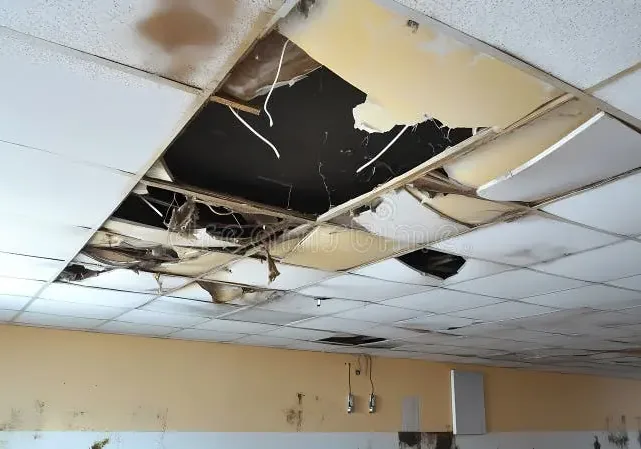
Nolan Creek runs through downtown Belton, and a hard rain can push it into storefronts along Central Avenue. What an owner does on the first day decides whether the business reopens quickly or loses weeks to walls that stayed wet inside.
Key takeaways
- Creek water is Category 3, so wet carpet, pad, insulation and lower drywall are removed instead of dried in place.
- Safety comes first: stay out of moving water and keep power off in wet areas until a qualified electrician says it is safe.
- Photos and a written list of stock, fixtures and equipment, made before anything is moved, keep the first day organized.
- Standing water is extracted before drying equipment is set, and drying ends on moisture readings, not on how the room looks.
- Nolan Creek has flooded downtown before, in December 1913 and again in September 2010, so a written day one plan is worth having before the next storm.
Why Nolan Creek puts downtown businesses at risk
Nolan Creek flows through downtown, and its flood history is well marked. In December 1913 a flood on the creek moved through the town.
In September 2010, Tropical Storm Hermine dropped more than 8 inches of rain in 12 hours. Nolan Creek flooded businesses along Central Avenue, and the Shirttail Bend area was evacuated.
The local pattern is flash flooding from short, heavy storms, so the warning time can be very short. For a business, the loss is never only the water: it is also the days the doors stay closed and the stock that cannot be sold.
- December 1913: a flood on Nolan Creek moves through the town
- September 2010: more than 8 inches of rain in 12 hours from Tropical Storm Hermine
- September 2010: Central Avenue businesses flooded and Shirttail Bend evacuated
The first steps: safety before stock
Water in a business is a building problem and a safety problem at the same time. The order of the first steps matters, and the stock comes last.
Moving water, hidden electrical hazards and slick floors injure more people than the flood itself, so the checklist starts with people.
- Stay out until the water has stopped rising and the area is safe to enter.
- Do not wade through moving water or wet areas near outlets, panels or equipment.
- Have power to the wet area shut off by a qualified electrician if there is any doubt.
- Close the main water valve if a broken pipe or fixture added to the flooding.
- Photograph every room and every wet item before anything is moved.
- Lift valuable items to dry shelves only when it is quick and safe to do so.
Why creek water is handled as Category 3
Creek water carries mud, runoff and whatever else the storm picked up on the way. Restoration standards treat it as Category 3, grossly contaminated water, even when it looks like muddy rain water.
That is why the scope of flash flood and creek water cleanup differs from a pipe leak. Porous materials that touched the water are removed, not dried, because they cannot be cleaned all the way through.
What usually comes out
Anything that soaked up the water and cannot be cleaned through is removed and bagged. Removal is the safest way to keep contamination out of the rebuilt space.
- Carpet, pad and insulation in wet walls
- Drywall cut out above the waterline
- Particleboard and laminate cabinet bases
- Paper goods, cardboard and fabric stock
What can usually stay
Hard, sealed materials are cleaned, treated and dried in place. Keeping them saves time and cost in the rebuild.
- Concrete floors and tile
- Metal shelving and fixtures
- Solid wood framing, once it has dried to normal readings
Extraction, cleaning and drying, in order
The crew begins with water extraction and removal, because standing water keeps soaking into wood and drywall for as long as it sits.
After that the building moves through the same sequence every time. Skipping a step usually means a repeat visit later.
- Standing water is pumped and extracted so the floor can be reached.
- Mud and debris are cleared, and wet porous materials are removed.
- Hard surfaces and framing are cleaned and treated for contamination.
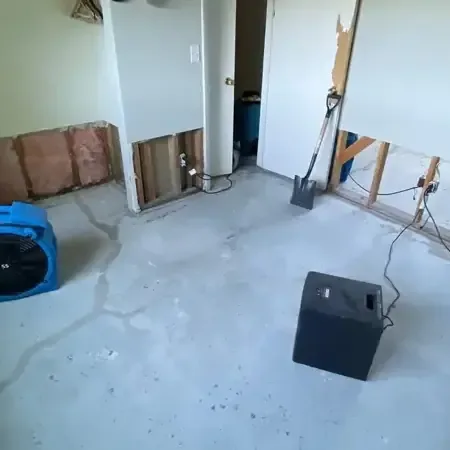
- Fans and dehumidifiers dry floors, wall cavities and ceilings, with moisture readings at each visit.
- Readings, not appearance, show when each area is dry.
Hidden water in walls, ceilings and floors
Most of the water in a flooded storefront is not on the surface. It climbs into drywall, trim and insulation by wicking, and it can sit in the slab long after the floor looks clean.
Meters and thermal cameras show where the water went, which is how a drying plan covers rooms that look untouched.
- Wicking: drywall can pull water well above the visible waterline
- Ceiling spaces and duct runs near the wet areas
- The base of shared walls, which may reach a neighboring tenant
- Floor coverings glued to the slab, which trap moisture underneath
Records, stock and talking to customers
A business owner has two jobs on the first day: stop the loss and keep people informed. Neither one can wait for the other.
Tenants should also tell the building owner right away, because shared walls and ceilings can carry water into other spaces.
- Write down the damaged stock, fixtures and equipment while the water is still visible.
- Keep receipts for emergency work and note the date and time of each step.
- Post a short notice on the door and tell regular customers and vendors that the doors are closed.
- Tell staff when to return and what to do until then.
- Store a copy of the records away from the building.
Reopening: when the building is truly ready
A floor that looks dry can still hold water in the slab, at the base of the walls and above the ceiling. Reopening too soon traps that moisture, and wet materials left for a day or two can start growing mold.
A full commercial water damage restoration job closes with documented readings, and structural drying is finished only when those readings return to normal.
- Moisture readings are normal on every tested wall and floor.
- No musty smell remains in the room or the ceiling space.
- Electrical outlets and equipment have been checked.
- Floors, trim and doors are safe to walk on and use.
- Walkways and exits are clear of equipment.
A day one plan to write before the next storm
The best time to decide who does what is when the creek is calm. A one page plan makes the first day shorter and keeps decisions from being made in a panic.
- Mark where the main water shutoff and the electrical panel are.
- Keep stock and paper records a few inches off the floor.
- List who to call first, including a qualified electrician and a plumber.
- Decide who closes up and who contacts customers.
- Keep photos and records somewhere that is not in the building.
Questions
Is creek water different from water from a broken pipe?
Yes. Creek water carries mud and contamination, so it is Category 3, and porous materials it touched are removed. Water from a clean supply pipe can often be dried in place.
Can a shop stay open while drying equipment runs?
Sometimes. Unaffected rooms may stay in use, but wet areas need to be closed, and noise, cords and safety matter. The drying team decides after seeing the layout.
How long does drying take after a flood?
Several days is common, and thick masonry or wood can take longer. Moisture readings decide when drying ends, not the calendar.
Should wet stock be thrown out?
Paper, cardboard, fabric and other porous stock that touched creek water is usually discarded. Sealed hard goods can often be cleaned. Photograph everything first.
Has Nolan Creek flooded downtown before?
Yes. A flood moved through the town in December 1913, and Tropical Storm Hermine in September 2010 flooded businesses along Central Avenue and led to the evacuation of Shirttail Bend.