Structural Drying and Dehumidification in Belton, TX
Extraction removes the water you can see. Structural drying removes what soaked into framing, subfloor, drywall and the slab, with equipment that stays until the readings say dry.
(888) 926-4485Start structural drying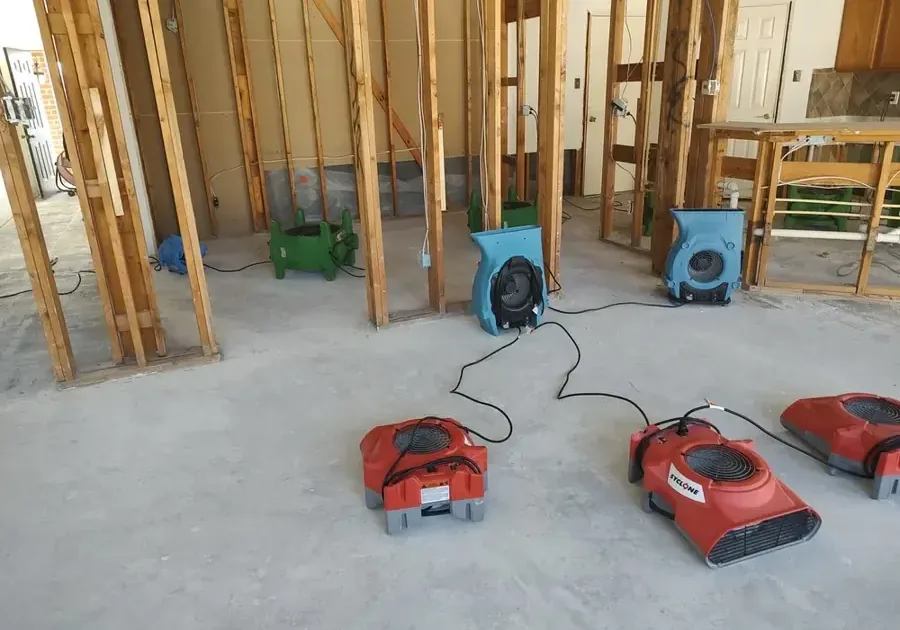
First steps for structural drying and dehumidification
- 1Keep windows and doors closedHumid outdoor air slows drying, and the dehumidifiers work best in a closed house.
- 2Leave the equipment runningTurning off air movers or dehumidifiers sets the drying back.
- 3Keep the AC onRunning the air conditioning helps hold indoor humidity down.
- 4Leave the equipment where it isAir movers and cords are placed on purpose, so ask before moving them.
How structural drying and dehumidification is handled
- 1
Map and set the goal
Moisture mapping and a dry reference set the target for each material.
- 2
Size the equipment
Air movers and dehumidifiers are sized to the class and the rooms.
- 3
Monitor daily
Readings and psychrometric logs track progress and guide adjustments.
- 4
Verify and remove
Equipment comes out when readings meet the drying goal.
What does structural drying and dehumidification cost in Belton, TX?
Structural drying typically runs $1,000 to $6,000 for equipment and daily monitoring. The number of rooms, the class of the loss and how many days the equipment runs set the number.
One room, Class 1 or 2
- Air movers and one dehumidifier
- Daily readings
- Drying logs
Several rooms
- Several LGR dehumidifiers
- Wall cavity drying
- Psychrometric logs
Class 4 materials
- Desiccant dehumidifiers
- Hardwood or slab drying
- Extended monitoring
These are typical ranges, not a quote. Water category, square footage, material class and how fast drying started move the number most. For a closer planning figure, run the water damage cost calculator.
Every water loss ends with drying, whatever caused it. Structural drying is the part that keeps a house from smelling or warping weeks later, because it dries the wood, drywall and concrete inside the structure, not just the surfaces you can touch.
How structural drying is planned
The tech who does the walkthrough maps moisture with pinless meters, pin meters and thermal imaging, and takes a dry reference reading from an unaffected area of the same material. The class of the loss, from Class 1 to Class 4, sets how much equipment a room needs. Class 4 materials such as hardwood, plaster and concrete hold water tightly and often need desiccant dehumidifiers.
- Class 1: a small area with low-porosity materials
- Class 2: a whole room, with carpet and walls wet
- Class 3: water from above, with ceilings and walls saturated
- Class 4: dense materials such as hardwood, plaster and concrete
Structural drying in a Central Texas climate
Outdoor air here is often humid in spring and after storms, so the drying team usually keeps the house closed and lets dehumidifiers control the air. Air movers are set to each room's evaporation load, and readings of temperature, humidity and grains per pound show whether the drying is working. Equipment is adjusted daily, not set and left. The National Weather Service posts the humidity and rain forecasts that shape a drying plan.
When structural drying is finished
Drying ends when wet materials read within 2 to 4 points of the dry reference, not on a fixed day. Those readings, the moisture map and the daily psychrometric logs go into the claim file. Drying starts after water extraction, and the EPA indoor air quality pages explain why lingering moisture matters.
Structural drying and dehumidification across Bell County
Coverage runs through ZIP 76513: downtown along Nolan Creek and Central Avenue, the UMHB blocks, Shirttail Bend, Three Creeks, Dawson Ranch, River Place and the Lake Belton side.
Temple, Morgan's Point Resort, Nolanville, Salado and Little River-Academy are covered too.
Structural Drying and Dehumidification questions
What does structural drying mean?
It means drying the materials inside the structure, such as framing, subfloor, drywall and concrete, not just the surfaces. Readings confirm when they are dry.
Why can't I just open the windows?
Outdoor air here is often humid, especially after rain. A closed house with dehumidifiers dries faster and more predictably.
How long does structural drying take?
Most Class 1 and 2 losses dry in three to five days. Class 4 materials such as hardwood and concrete take longer.
What is a dry reference?
A reading from an unaffected area of the same material. Wet materials are dried until they read within 2 to 4 points of it.
Is the drying equipment loud?
Air movers and dehumidifiers make steady noise and add heat. They run around the clock because stopping them slows drying.
Why are daily readings needed?
They show whether drying is on track, guide equipment changes and document the drying for the insurance claim.
Walls and floors still damp?
The drying team maps every wet material, sizes the equipment and logs readings daily until the structure meets the IICRC S500 drying goal.
(888) 926-4485Book structural dryingBelton Water Damage Restoration
Belton, TX · Bell County
Open 24 hours, 7 days a week