Slab Leak Water Damage in Belton, TX
Clay soil moves slab foundations here, and the pipes inside them pay for it. The restoration team traces the wet area, lifts flooring and dries the slab and walls to the IICRC S500 standard.
(888) 926-4485Get the slab leak dried out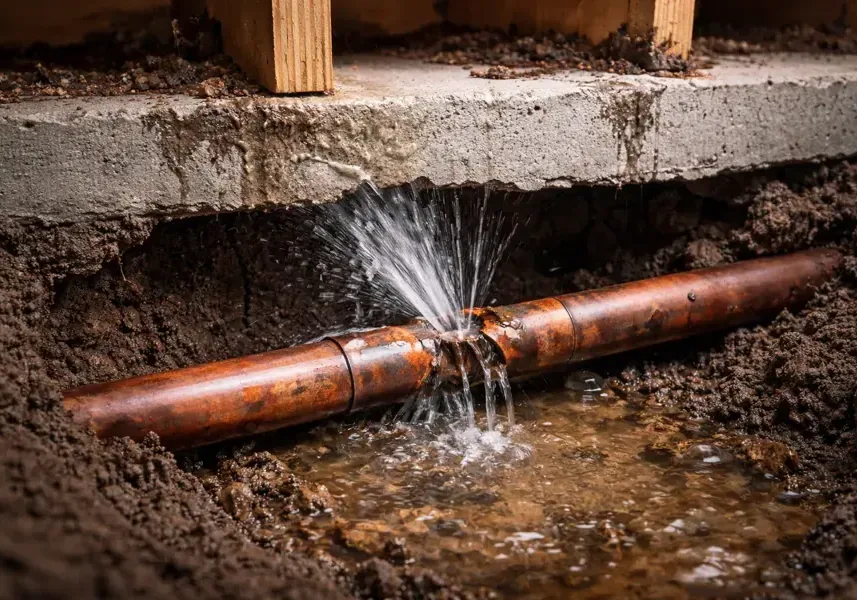
First steps for slab leak water damage
- 1Shut off the main valveIf water is showing or the meter moves with taps off, close the main to stop the leak feeding the slab.
- 2Check the water meterWith every fixture off, a moving meter dial points to a hidden leak.
- 3Keep off wet flooringWet laminate and plank can buckle and split when walked on.
- 4Call a plumber and the drying teamThe leak repair and the drying are separate jobs, and both should start quickly.
How slab leak water damage is handled
- 1
Map the slab and walls
Thermal imaging and pinless meters trace the wet area beyond what is visible.
- 2
Open trapped areas
Wet flooring, pad and baseboards come up where they hold water against the concrete.
- 3
Dry the concrete and framing
Air movers and LGR dehumidifiers run, with desiccants added when the slab dries slowly.
- 4
Verify with readings
Daily readings continue until the slab and walls reach the drying goal.
What does slab leak water damage cost in Belton, TX?
Slab leak water damage restoration typically runs $1,500 to $6,000 for drying and flooring removal, before the plumbing repair. The rooms affected, the flooring type and how long the leak ran set the number.
One room, caught early
- Moisture mapping
- Baseboards opened
- Slab drying setup
Several rooms
- Flooring lifted where water is trapped
- Multiple LGR dehumidifiers
- Daily slab readings
Long-running leak
- Flooring removed across rooms
- Lower drywall cut
- Extended slab drying
These are typical ranges, not a quote. Water category, square footage, material class and how fast drying started move the number most. For a closer planning figure, run the water damage cost calculator.
A slab leak hides until the water shows up somewhere else: a warm spot on the tile, a damp baseboard, a water bill that jumps for no reason. By then, water has often spread under flooring across several rooms, especially in the slab-on-grade homes of Three Creeks, Dawson Ranch and River Place.
Why slab leaks happen on clay soil
Much of Bell County sits on clay that shrinks in long dry spells and swells after heavy rain. As the soil moves, the slab flexes, and the copper or PEX supply pipes inside and under it take the strain at joints and bends. Hot water pipes also expand and contract every day, which can wear pipe where it rubs concrete.
- Warm or damp spots on tile or wood floors
- A water bill rising with no change in use
- The sound of running water with every tap off
- Cracked grout or baseboards that stay damp
How slab leak water damage is dried
A plumber locates and repairs the leak; the drying is a separate job. The tech who does the walkthrough maps moisture across the slab and up the walls. The drying team then lifts wet flooring where water is trapped, opens baseboards and sets air movers and LGR dehumidifiers. Concrete gives up water slowly, so readings continue daily until the slab meets the drying goal.
The EPA WaterSense leak checks include the water meter test, and the slab leak risk check scores the warning signs in your house.
Flooring after slab leak water damage
Tile set directly on the slab can sometimes stay while the concrete dries through grout joints and opened edges. Laminate, vinyl plank over pad and carpet pad usually come up, because they trap water against the concrete. Engineered wood often cups and is assessed room by room.
For coverage questions, the Texas Department of Insurance explains how homeowners policies work in Texas.
Trade fact: a slab can look dry on top while the concrete below still holds water, so readings, not looks, decide when drying ends.
Slab leak water damage across Bell County
Coverage runs through ZIP 76513: downtown along Nolan Creek and Central Avenue, the UMHB blocks, Shirttail Bend, Three Creeks, Dawson Ranch, River Place and the Lake Belton side.
Temple, Morgan's Point Resort, Nolanville, Salado and Little River-Academy are covered too.
Slab Leak Water Damage questions
How do I know I have a slab leak?
Common signs are a warm or damp spot on the floor, a water bill that rises without more use, and the sound of water running with every tap off. A meter test with all fixtures off is a quick first check.
Who fixes the leak and who dries the house?
A plumber locates and repairs the leak. The restoration team handles the water damage: moisture mapping, flooring removal where needed and drying the slab and walls.
How long does a slab take to dry?
Concrete dries slowly. A small area often dries in three to five days, while a leak that ran for weeks can take longer. Readings, not a date, decide when it is done.
Does all my flooring have to come up?
Not always. Tile on the slab can often stay. Laminate, vinyl plank over pad and carpet pad usually come up where they trap water against the concrete.
Why are slab leaks common around here?
Clay soil across the county shrinks and swells with the weather, which moves slab foundations and stresses the pipes inside them.
Is slab leak damage covered by insurance?
Policies often treat the access, the drying and the pipe repair differently. Coverage depends on your policy, so check with your own insurer.
Water coming up through the floor?
The drying team maps the slab, opens what traps water and dries the concrete and walls to the IICRC S500 standard.
(888) 926-4485Start slab leak dryingBelton Water Damage Restoration
Belton, TX · Bell County
Open 24 hours, 7 days a week