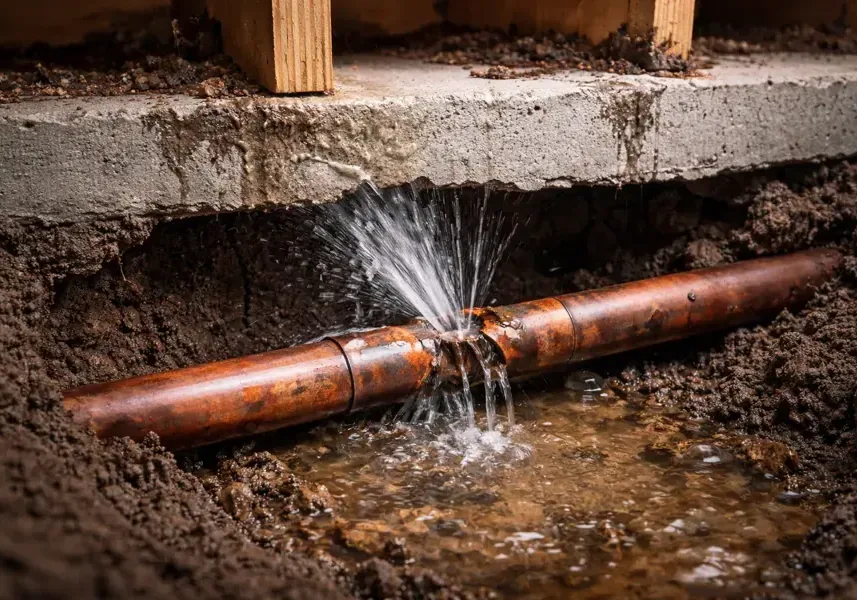
Three Creeks, Dawson Ranch and River Place are subdivisions built on slab on grade foundations, beside older pier and beam homes near downtown and the UMHB campus. A supply pipe that leaks under a slab never drips where anyone can see it, so the signs are quiet and easy to miss.
Key takeaways
- A slab leak is a leak in a pressurized supply pipe under the foundation, so water keeps flowing even when nothing is running above.
- The usual signs are a warm spot on the floor, the sound of running water, a water meter that moves with every fixture off, and damp flooring or baseboards.
- A meter test and a walk across the floors can tell an owner whether to ask a plumber for leak detection, long before any floor is opened.
- After the leak is found and fixed, the water damage team lifts wet flooring, dries the slab surface and the lower walls, and confirms with moisture readings.
- Clay soil across the region shrinks in dry spells and swells when wet, a general stress on slabs and the pipes in them.
What a slab leak is, and what it is not
A slab leak is a leak in a pressurized supply pipe that runs in or under the concrete slab. It is different from a drain leak, which carries wastewater and does not stay under pressure.
Because the pipe is under pressure, the water keeps coming, and it finds its way up through the slab or sideways under the walls.
The water often reaches the house at the edges, where flooring meets the wall, long before it shows in the middle of a room.
That is why owners often notice a smell, a warm patch or a damp baseboard before they see any actual water.
Why slab homes in Belton deserve a closer look
Newer subdivisions such as Three Creeks, Dawson Ranch and River Place sit on slab on grade foundations, while older homes near downtown and the UMHB campus are pier and beam. A slab home has no crawl space where a leak could be seen from below.
Across the region, heavy clay soil shrinks in dry spells and swells when wet. That movement is a general stress on slab foundations and on the pipes inside them.
None of this means every slab home will leak. It means the signs are worth knowing.
Signs of a slab leak
Slab leaks announce themselves in small ways. Any one sign can have another cause, and two or three together deserve attention.
A pattern of signs in the same part of the house is the strongest clue.
- A warm spot on a floor, which can mean a leaking hot water pipe
- The sound of running or hissing water with every fixture off
- A water meter that keeps moving when nothing is in use
- Damp carpet, buckling laminate or lifting tile in one area
- Wet baseboards or soft drywall near the floor
- A musty smell with no obvious source
- Water pressure that drops without explanation
Why waiting makes a slab leak worse
A slab leak runs all day and all night. The longer it runs, the larger the area it soaks and the more material has to come out.
Water that cannot escape upward spreads sideways under the flooring and into the base of the walls, which is how a small warm spot becomes a whole room of damp floor.
- The leak keeps flowing until the pipe is repaired
- Wet flooring and baseboards begin to swell and break down
- A musty smell can start after a day or two of dampness
- Moisture under the flooring slows drying even after the repair
A home check before calling anyone
Two quick checks can help an owner decide whether to bring in leak detection. Neither one needs tools.
The slab leak risk check turns these signs into a short checklist.
The water meter test
Turn off every fixture and appliance that uses water, including the ice maker. Then watch the meter dial or the small leak indicator.
- If the dial or indicator moves, water is flowing somewhere
- Check toilets for a silent leak before assuming the slab
- Note the reading, wait an hour or two and read it again
The floor walk
Walk barefoot over hard floors and feel for warm or damp spots. Check the edges of carpet and the base of walls.
- Warm tile or concrete
- Damp carpet edges and baseboards
- Hairline cracks in grout that did not exist before
What happens after a slab leak is confirmed
A plumber locates the leak and repairs the pipe. The water damage team handles what the leak did to the house, and the two jobs are usually sequenced so the floor is not opened twice.
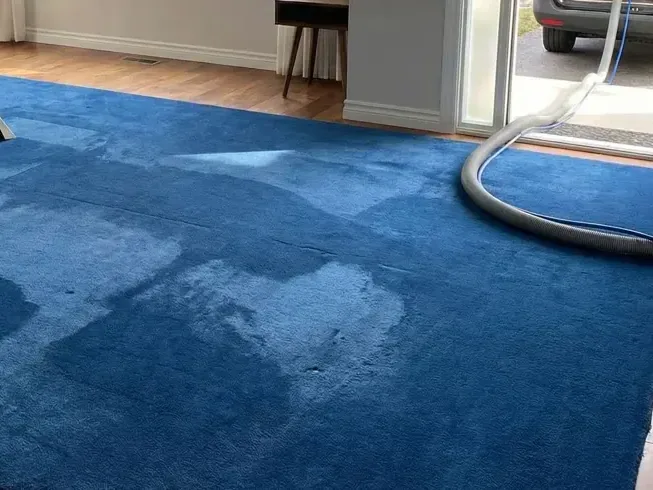
For a pipe that leaked under a slab, slab leak water damage restoration means lifting wet flooring, removing wet baseboard and lower drywall where needed, extracting water and drying the slab and walls. Structural drying continues until readings are normal.
- Wet flooring is lifted so the slab can dry
- Baseboards and lower drywall are removed where they wicked water
- Standing water is extracted
- Fans and dehumidifiers dry the slab surface and the walls
- Readings confirm the structure is dry before flooring goes back
Flooring and hidden damage
Different floors hide a slab leak in different ways. The material decides what can be saved.
When water has spread, a crew starts with water extraction so the slab and walls can begin to dry.
- Carpet and pad: the pad holds water and usually has to be removed
- Laminate: swells at the seams and is rarely dried in place
- Hardwood: cups and buckles, and drying must start early
- Tile: may look fine while the grout and slab below stay wet
Questions
How is a slab leak located?
A plumber uses tools that listen for water, trace heat or pressure test the pipes. The tools narrow the leak to a spot before any floor is opened.
Does a high water bill mean a slab leak?
It can be a clue, but it is not proof, since bills change with weather and use. A moving meter with every fixture off is stronger evidence than a bill.
Is a slab leak an emergency?
Because the water keeps flowing, the damage keeps growing. Closing the main valve slows it until a plumber arrives, and drying should start soon after the repair.
Can wet flooring be saved?
Tile and some sealed floors can often be dried in place. Carpet pad, laminate and hardwood usually need to be lifted so the slab can dry, and a moisture reading decides whether a floor is salvageable.
Do older pier and beam homes near downtown have slab leaks?
Pier and beam homes have a crawl space, so supply pipe leaks show up under the floor instead. The signs and the drying steps differ, which is why the foundation type matters and why a plumber looks at the house before guessing.