Harker Heights has a humid subtropical climate with hot summers and mostly mild to cool winters, which is why a hard freeze catches so many pipes unprepared. Winter storms in February 2021 and January 2026 are reminders to find the shutoff valve before the next cold snap, not during it.
Key takeaways
- A pipe that freezes does not always burst at the freeze. The split often shows when the ice melts and water starts moving again.
- The main shutoff valve is the most important tool in a burst pipe event, so every adult in the house should know where it is.
- Attic pipes, garage pipes, exterior wall pipes and outdoor faucets are the usual first failures.
- Standing water is extracted first, then wet insulation and drywall are opened and dried with equipment and moisture readings.
- Both recent storms disrupted city operations, which shows how far a regional winter storm reaches.
What the last two winter storms meant for Harker Heights
The February 2021 winter storm was regional, and it reached the city hard. The city issued a boil water notice on February 18, 2021 and rescinded it for all properties on February 27, 2021.
The storm also damaged city streets. The city later rebuilt 9 collector streets and made point repairs on 19 more.
In January 2026 another winter storm crossed the region. The city opened a warming center at VFW Post 3892 and kept non essential offices closed for days.
- February 18 to February 27, 2021: boil water notice in effect
- January 23, 2026: warming center opens at VFW Post 3892 at 7 p.m.
- January 27, 2026: non essential offices stay closed until noon
- The warming center reported 25 people between Friday night and Monday
Where pipes split first in a cold snap
Pipes can freeze even where winters are mostly mild, because one night of hard cold is enough. The places that fail first are the ones with the least heat around them.
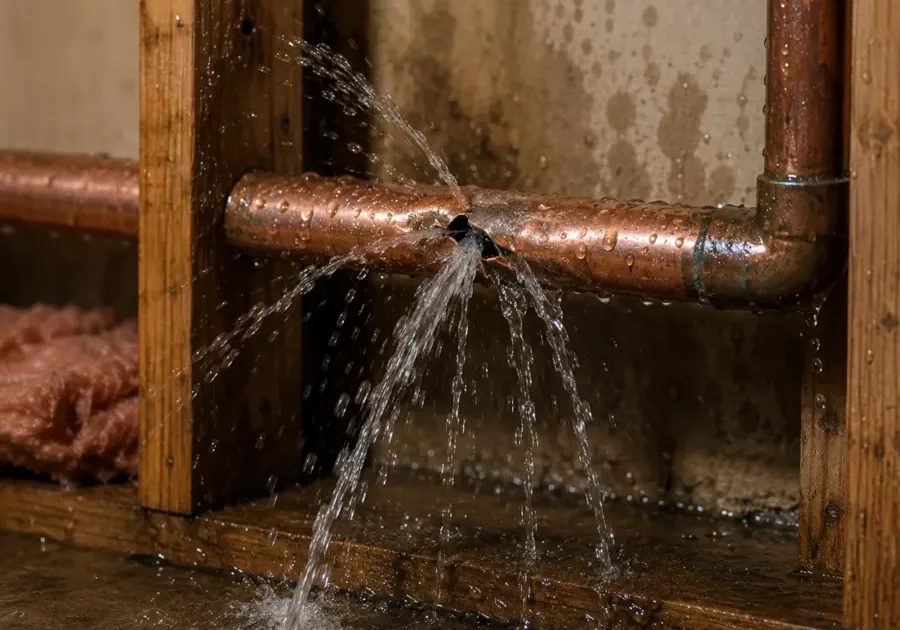
A split is rarely dramatic at the moment it happens. A hairline crack can release only a trickle until the ice behind it melts, and then the flow can be steady.
- Supply pipes in attics
- Pipes in garages and utility rooms
- Pipes inside exterior walls, including those under sinks on outside walls
- Hose bibs and other outdoor faucets
A short checklist before the cold hits
Most burst pipe damage can be reduced by a little preparation. The steps cost almost nothing and take an afternoon.
A written list on the refrigerator helps everyone in the house act the same way.
- Find the main shutoff valve and mark it so anyone can find it.
- Disconnect garden hoses and cover outdoor faucets.
- Let faucets on exterior walls drip during the coldest hours.
- Open cabinet doors under sinks on exterior walls.
- Keep the heat on, even in rooms that are not used.
- Wrap exposed pipes in attics and garages.
- Know where the electrical panel is in case water reaches outlets.
Knowing the shutoff before it matters
Most homes have a main shutoff valve where the water pipe enters the house, and a second valve at the street meter that is not meant for residents to use. The one inside or beside the house is the one to learn.
Turn it fully once a year to be sure it moves. A valve that has not been touched in years can stick at the worst moment.
- Find the valve and mark it with a tag or tape
- Test it once a year, then open it again
- Show every adult in the house where it is
- Know the shutoff under each sink and behind each toilet as well
When a pipe lets go
The first steps decide how much of the house gets wet. They are simple, and they should be known before they are needed.
Stop the water
Close the main shutoff valve, then open a low faucet to drain what is left in the pipes. Turn off power to wet areas only if it can be done safely.
- Photograph the source and the wet areas
- Move furniture and small items out of the water
- Do not stand under a bulging ceiling
Extraction and drying
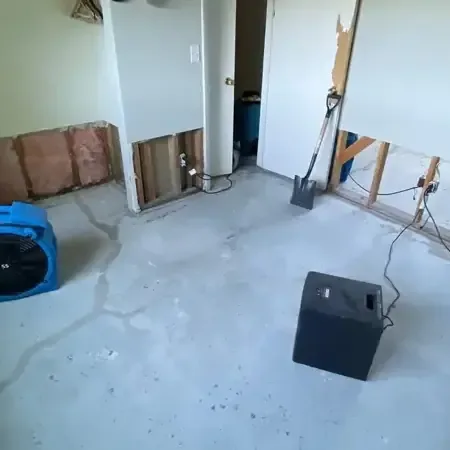
The restoration team removes standing water, opens wet drywall and insulation and sets drying equipment. The full process for burst pipe water damage ends with readings that confirm every wall and floor is dry.
Wet insulation holds water against drywall, so it comes out even when it looks only damp.
What the drying team looks for
Water from a burst pipe follows gravity and framing. It runs down inside wall cavities, across ceilings below an attic pipe, and under floors that look dry on top.
Moisture meters and thermal imaging show where it traveled, which is how the drying plan reaches the wall bays and ceiling spaces that never looked wet.
- Ceilings below an attic pipe and the insulation above them
- Wall bays under a split exterior wall pipe
- Cabinet bases and flooring under a kitchen or bath pipe
- Garage walls and stored items near a split pipe
After the thaw: finding leaks that were hidden
A freeze can split a pipe inside a wall and show nothing until the thaw. A quiet house can still be leaking.
Frozen pipe water damage is often found by the signs below, so a walk through the house after the weather warms is worth the time.
- A water stain on a ceiling or wall that was not there before
- The sound of running water with every fixture off
- A water meter that keeps moving when nothing is in use
- Damp baseboards, soft drywall or a musty smell
Beeline Drive: the city's pipe work is a separate matter
In 2022 the city planned to replace small galvanized water pipes on Beeline Drive with PVC and add new fire hydrants, and the work was at the design stage at that time.
The plan applied to that stretch of Beeline Drive and says nothing about the pipes inside any home.
Homes across the city, and the nearby burst pipe water damage response in the wider area, handle indoor pipe failures the same way: shut off, extract, dry. More local detail is on the Harker Heights hub.
Questions
Should the main water valve be turned off during a hard freeze?
If pipes are likely to split and nobody will be home, shutting the main valve and draining the pipes limits the water that can escape. A burst pipe event is also the time to close it at once.
How can a split pipe be found if no water is visible?
Look for new stains, listen for running water, and watch the water meter with every fixture off. A moving meter points to a leak somewhere in the house.
Do leaks show up right at the freeze?
Often not. Ice can plug a split pipe, and the water only flows when the ice melts.
How long does drying take after a burst pipe?
Several days is common. Wet insulation and drywall are removed, and drying continues until moisture readings are normal.
Why do pipes freeze in a mild climate?
Pipes in attics, garages and exterior walls have little heat around them, so one hard night can freeze them even when most winter days are mild.