On May 22, 2024, EF-1 and EF-2 tornadoes struck the West Temple area, and close to 500 homes and businesses were destroyed or damaged. Once a roof is open, every rain after that becomes a water damage event, long after the wind has passed.
Key takeaways
- Rain that enters through a torn roof soaks attic insulation and decking first, then ceilings and walls.
- A temporary cover keeps more water out, but wet insulation and drywall keep holding the water that already got in.
- Ceilings that bulge or sag are heavy with water and are unsafe to stand under.
- Drying works from the top down: attic, ceiling, walls, floors, then contents.
- Photos and a storm damage report to the Texas Division of Emergency Management, which the city asked for in May 2024, create a record of the loss.
What the May 2024 tornadoes left behind
The tornadoes of May 22, 2024 were rated EF-1 and EF-2, and they struck the West Temple area. Close to 500 homes and businesses were destroyed or damaged.
The city issued an emergency declaration, and on May 23, 2024 it set up the Temple Recovery Taskforce. The city also urged residents and businesses with storm damage to file a report with the Texas Division of Emergency Management.
- May 22, 2024: EF-1 and EF-2 tornadoes strike West Temple
- Close to 500 homes and businesses destroyed or damaged
- May 23, 2024: the city sets up its recovery taskforce
- Residents and businesses asked to report storm damage to the state emergency agency
How rain gets in after the roof opens
A roof that has lost its covering is open to every shower that follows. Water does not need a big hole: a torn corner, a lifted shingle or a pulled vent is enough.
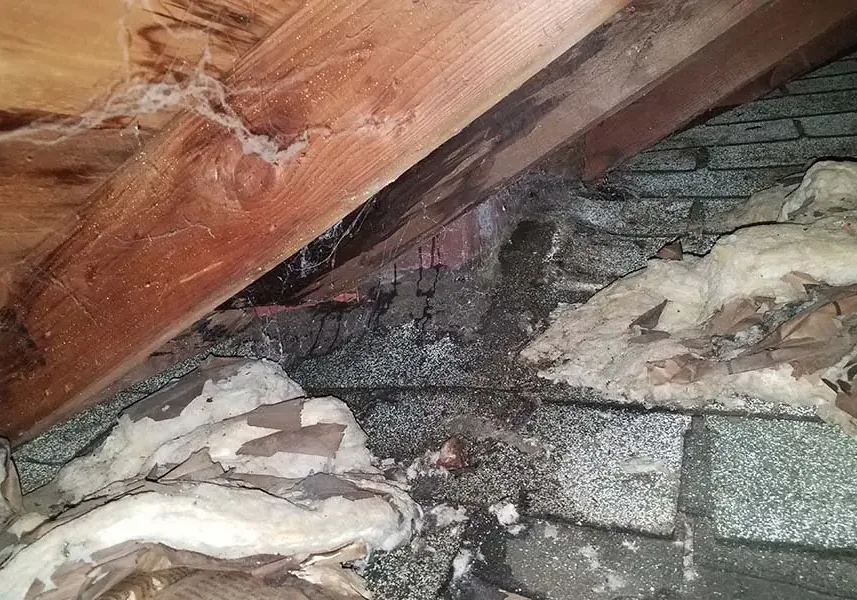
Once water is in the attic, it soaks insulation, runs along rafters and drops through ceilings in places that can be far from the opening.
- Missing shingles or torn roofing
- Exposed or cracked decking
- Flashing and vents pulled loose
- Tarps that slip or tear in later wind
- Wind driven rain pushed under damaged edges
Why wet insulation is the hidden problem
Attic insulation acts like a sponge. It soaks up rain that came through the roof and holds it against the ceiling below, long after the sky has cleared.
That is why a ceiling can keep stained or sag a week after the last rain. The water is still there, and it is coming from above.
- Wet insulation presses on the drywall and adds weight to the ceiling
- It dries slowly because air cannot reach the middle of the batt
- Water can travel along rafters and appear in a different room
- Removing it is usually part of the drying plan
Protecting the house before the roof is fixed
The roof is the first repair, but the inside of the house still needs protection while the work waits. A short list keeps the damage from growing.
Safety comes before anything else, because a ceiling holding water can fall without warning.
- Cover the opening with a temporary tarp or panel as soon as it is safe.
- Move furniture and valuables out from under wet ceilings.
- Place buckets under drips and empty them often.
- Stay out from under any ceiling that bulges or sags.
- Turn off power to wet areas if water is near fixtures and outlets.
- Photograph the roof, the ceilings and every wet room with dates.
How the drying team works from the top down
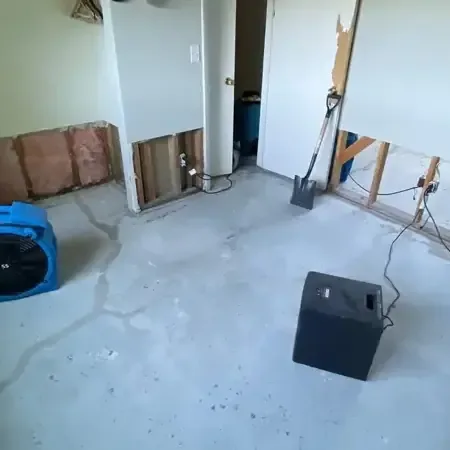
Water moves down, so the drying plan starts at the top and works its way through the house. Skipping the attic leaves the source of moisture in place.
Attic and decking
Wet insulation holds water against the ceiling below and is usually removed. The team dries the decking and framing and checks the readings before the roof is closed in.
The full process for roof leak water damage starts here because dry framing is what keeps the rest of the job from repeating.
Ceilings and walls
Drywall that holds water, sags or stains is cut out where it cannot be dried. Smaller stains can often be dried in place when they are caught early.
Ceiling leak water damage is handled with openings that let air reach the cavity, so the drying equipment can do its work.
Floors and contents
Water that fell through the ceiling lands on floors and furniture. Carpet, pad and rugs are extracted, and the lower walls and floors are dried and checked.
Contents are moved, cleaned or discarded depending on the material.
Records and reporting after storm damage
In May 2024 the city asked residents and businesses with storm damage to file a report with the Texas Division of Emergency Management. Photos and notes made at the time help with that report.
A written list of what was wet and when, along with receipts for tarps and emergency work, keeps the facts straight and saves time later. Homes across Temple can use the same list for any later storm.
- Dated photos of the roof, attic and every wet room
- A list of damaged items and materials
- Receipts for tarps, repairs and emergency work
- A note of each rain that came in after the storm
Problems that show up weeks later
Water that was never fully dried tends to resurface. A ceiling that looked fine after a rain can stain again at the next one.
Wet insulation or drywall left in place can start growing mold within days, and the signs often show first on the ceiling or high on a wall. The nearby roof leak water damage response in the wider area uses the same checks.
- Stains that return after each rain
- Musty smell in a room or the attic
- Peeling paint or swollen trim near the ceiling
- Light fixtures that flicker or collect water
Questions
Is a small roof leak after a storm an emergency?
It can become one. A small opening can let in a lot of water during a hard rain, and wet insulation keeps the water against the ceiling. A temporary cover and a drying check are worth doing early.
Does a tarp stop the water damage?
A tarp keeps more water out. It does not dry the insulation, drywall and framing that already got wet, so the drying team still has to check them, and a tarp can fail in the next wind.
How long can wet insulation stay in an attic?
Not long. Wet insulation holds water against the ceiling and can grow mold within days, so it is usually removed, and the attic is dried before new insulation goes in.
Should a sagging ceiling be cut open?
Only by someone who can do it safely. A ceiling that holds water is heavy, and the area below should be cleared first.
What does the drying team do first?
The team starts at the top: it finds the source, removes wet insulation, and sets equipment to dry the attic, ceiling and walls before checking the floors.