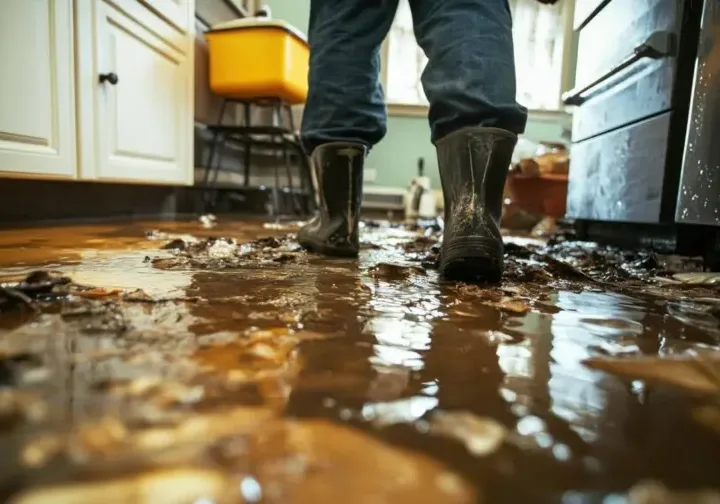
Sewage that comes back up through a floor drain, tub or toilet is a health hazard the moment it touches the floor. Around Bird Creek in Temple, heavy rain has pushed the sewer system past its limits more than once, which is a good reason to know the steps before a backup happens.
Key takeaways
- Sewage is Category 3 water, so carpet, pad, insulation and lower drywall it touches are removed, not saved.
- Stop using sinks, tubs, toilets and appliances that drain, because they can add more sewage to the problem.
- Overflows near Bird Creek in May 2023 and May 2024 show the area's rain record, and the Bird Creek Trunk Sewer Project finished in April 2025, but no project makes a single home's backup impossible.
- The city maintains the public sewer mains, and a plumber can tell whether a blockage is inside the home or in the street.
- Cleanup follows a fixed order: contain, extract, remove, disinfect, dry and confirm with readings.
What the overflow record around Bird Creek shows
The Bell County Public Health District says neighborhoods around Bird Creek have had recurring water overflow.
Rain on May 10, 2023 caused a sanitary sewer overflow of more than 100,000 gallons near the creek, and the city worked to contain and disinfect the receiving stream. After heavy rain in May 2024, the overflow total reached 1.1 million gallons.
The Bird Creek Trunk Sewer Project replaced the aging Bird Creek Interceptor, a main sewer pipe from north of Adams Avenue to south of Lions Park. It finished in late April 2025, and coverage of the project says the new interceptor resolves earlier sanitary overflow problems.
- May 10, 2023: overflow of more than 100,000 gallons near Bird Creek after rain
- May 2024: overflow total of 1.1 million gallons after heavy rain
- Late April 2025: Bird Creek Trunk Sewer Project finished
What a sanitary sewer overflow means for a home
A sanitary sewer overflow happens when more wastewater enters the system than the pipes can carry. The excess escapes where it can: at manholes, or back up through the lowest drains in a building.
In Temple the recorded overflows followed heavy rain. A home does not have to be beside the creek to feel the effect, because the lowest drain on a connected pipe is where the pressure shows.
- Rain adds water to a system that is already carrying household flow
- The first sign inside a home is usually a slow or gurgling drain
- The lowest drain, often a floor drain, shows the problem first
Signs that sewage is coming back into a house
Sewage tends to show first at the lowest drain in a house, because that is where it escapes first. The early signs are easy to mistake for an ordinary clog.
A backup that is caught while it is still a few drains gurgling is far cheaper to clean than one that has spread across a floor.
- Gurgling sounds from drains or toilets
- Several drains slowing down at once
- Water rising in a tub or shower when a toilet is flushed or the washer drains
- Dark, foul smelling water at a floor drain
- A sewage smell in a utility room or garage
The first steps before cleanup starts
A crew trained in sewage backup cleanup works under the Category 3 rules for water that carries waste. Until the crew is on the job, a few steps limit the spread.
None of these steps involves touching or cleaning the sewage by hand.
- Stop all water use, including flushing, showers, the washer and the dishwasher.
- Keep children, pets and anyone with a weak immune system out of the area.
- Shut off power to the wet area only if it can be done from a dry spot.
- Wear gloves, boots and a mask if the area has to be entered.
- Photograph the loss, then leave materials where they are.
How the cleanup works
The work moves in the same order on every sewage job. Each stage keeps contamination from spreading to the next one.
Containment and extraction
The affected area is sealed with plastic so contamination does not travel through the house. Standing sewage is then removed with water extraction equipment.
Air scrubbers and negative air are used where odor or airborne contamination could move into clean rooms.
Removal and disinfection
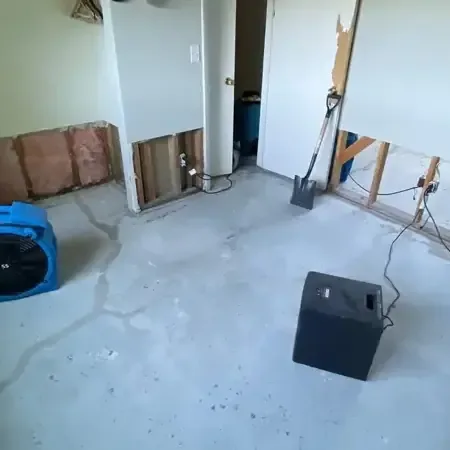
Porous materials that wicked sewage are cut out and bagged. Hard surfaces and framing stay, but they are cleaned and treated with antimicrobial products.
- Carpet and pad
- Insulation and drywall at the base of walls
- Fabric, cardboard and other porous contents
- Hard surfaces and framing are cleaned instead of removed
Drying and clearance
Fans and dehumidifiers dry the framing and the floor. Moisture readings confirm the structure is dry before anything is rebuilt.
A final check for odor and surface contamination closes the job.
Furniture and belongings
Contents that touched sewage are sorted by material. Hard, sealed items such as metal, glass and some plastics can usually be cleaned and treated.
Upholstery, mattresses, rugs and paper goods that soaked up sewage are usually discarded, and photographs taken before removal support later decisions.
- Usually cleaned: metal, glass, sealed plastic and finished hard wood
- Usually discarded: carpet, upholstery, mattresses and stuffed items
- Case by case: books, electronics and special items
City sewer main or the home's own drain?
City crews clean and maintain the sewer mains that carry wastewater from homes and businesses to the treatment plants. A problem in the public main is a matter for the City of Temple Utility Services.
A plumber can tell whether the blockage is inside the home or out in the street. The restoration work is the same either way: the water has to be contained, removed and the building dried.
Getting ready for the next heavy rain
Slow drains after a hard rain are a warning worth acting on, because a small backup is far easier to clean than a large one.
Water damage restoration across Temple follows the same Category 3 steps used for sewage backup cleanup in the wider area.
- Learn which drains are the lowest in the house, since those back up first.
- Keep stored items off the floor in rooms with floor drains.
- Know where the main water shutoff and the electrical panel are.
- Keep a plumber's number somewhere easy to find.
Questions
Is a sewage backup dangerous?
Yes. Sewage can carry bacteria and other contaminants, which is why it is treated as Category 3 water. Gloves, boots and a mask are the minimum for anyone who has to enter the area.
Can carpet be saved after a sewage backup?
Almost never. Carpet and pad soak up contaminated water and cannot be cleaned all the way through, so they are removed.
Did the Bird Creek project end sewer backups?
Coverage of the project says the new interceptor resolves earlier overflow problems, but a clog in one home's drain can happen on any dry day. The project does not change what to do if a backup occurs.
Who fixes the clog?
A plumber handles blockages in a home's own drains. The city handles the public sewer mains. The restoration team handles the water and the building either way.
How long does sewage cleanup take?
Removal and disinfection usually come first, and drying can add several days. Moisture readings decide when the structure is ready.