Crawl Space Water Removal in Temple, TX
Water under a raised floor goes unseen until the flooring above softens or a musty smell rises. The extraction crew pumps the crawl space out, removes wet insulation and dries the joists and subfloor.
(888) 926-4485Pump the crawl space dry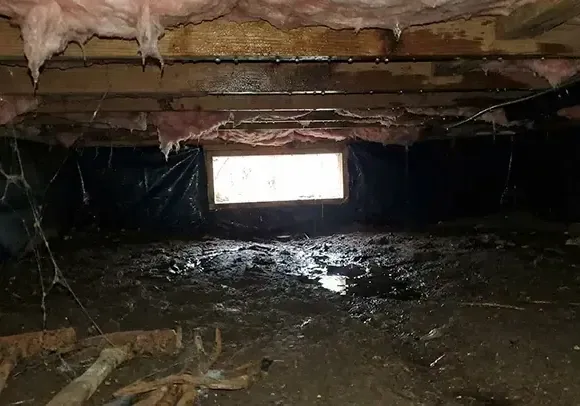
First steps for crawl space water removal
- 1Stay out of standing waterDo not enter a flooded crawl space, because wiring and contaminated water can both be present.
- 2Check the sourceLook for a leaking pipe near the access and shut the water off if one is the cause.
- 3Photograph from the accessTake pictures of the water and any visible wet insulation without stepping in.
- 4Call for pumpingSay how deep the water looks so the crew brings the right pump and gear.
How crawl space water removal is handled
- 1
Pump
Submersible pumps clear standing water, and the source is identified and stopped.
- 2
Remove
Soaked insulation and a wet vapor barrier come out and are bagged.
- 3
Dry
Air movers and dehumidifiers dry joists and subfloor from below and above.
- 4
Verify
Readings on the wood and the floor above confirm the space is dry.
What does crawl space water removal cost in Temple, TX?
A small leak with little standing water runs $1,000 to $2,000. Standing water and wet insulation run $2,000 to $6,000, and sewage or flood water runs $6,000 to $13,000.
Small leak, little water
- Pumping and water extraction
- Moisture mapping of joists
- Joist drying
Standing water, wet insulation
- Insulation and barrier removed
- Air movers and dehumidifiers
- Daily readings
Sewage or flood water
- Category 3 protocol
- Antimicrobial treatment
- Extended drying period
These are typical ranges, not a quote. Water category, square footage, material class and how fast drying started move the number most. For a closer planning figure, run the water damage cost calculator.
A crawl space is the one part of the house nobody checks, so water can sit there through a whole season. By the time a floor feels soft, the joists, insulation and subfloor above it have often been damp a long while.
Where crawl space water comes from
Heavy rain that runs toward the foundation, a leaking supply pipe, a drain that dripped for weeks or a backup can all fill a crawl space. Each calls for a different response, so the crew identifies the source and the water category first.
- Rain runoff soaks the soil, the insulation and the barrier
- Leaking supply or drain pipes pool under the floor
- Sewage backups call for Category 3 handling and disposal
- Condensation on cold surfaces keeps materials damp
Crawl space water removal and local clay soil
Temple sits at the edge of the Blackland Prairie region, where heavy clay soils shrink in drought and swell when wet, a regional pattern. Clay holds water after heavy rain, which is why runoff near a foundation can linger long after a storm.
Drying the crawl space and the floor above
After pumping, wet insulation and a soaked vapor barrier are removed, and air movers and dehumidifiers dry the joists and subfloor. Readings above and below show when the space is dry. Larger events are handled alongside flood water cleanup, and the drying follows the structural drying standard.
Do not crawl in. Wiring and contaminated water can both be present, so entry is left to crews with protective gear and lighting.
Crawl space water removal across Temple and nearby towns
Crawl space calls come from across Temple, including Western Hills, Alta Vista, Pecan Creek, Windmill Farms and Prairie Ridge, for homes with raised floors.
The same service nearby: crawl space water removal in Belton, Harker Heights, Killeen.
Crawl Space Water Removal questions
How can standing water in a crawl space be spotted?
A musty smell, soft or cupped flooring, high indoor humidity and visible water at the access panel are the usual signs.
Does the vapor barrier get replaced?
A soaked or torn vapor barrier is removed and a new one is installed during the rebuild. Insulation that stayed dry can often remain.
Is a wet crawl space a mold risk?
It can be, because a dark, damp space lets growth start within 24 to 48 hours of wet materials. Quick pumping and drying are the best defense.
Can the water be left to evaporate?
No. Water that sits under a floor keeps the subfloor and joists damp, and evaporation adds humidity to the whole house.
What if the water is sewage?
Then it is Category 3, which means protective gear, removal of porous materials and antimicrobial treatment before any drying starts.
Who repairs the pipe or drain?
A plumber repairs the source. The drying team removes the water, records the readings and dries the structure afterward.
Floors going soft?
The extraction crew pumps the space out, removes wet insulation and dries the joists and subfloor from below while checking the rooms above.
(888) 926-4485Clear the water under the floorBelton Water Damage Restoration
Temple, TX · Bell County
Open 24 hours, 7 days a week